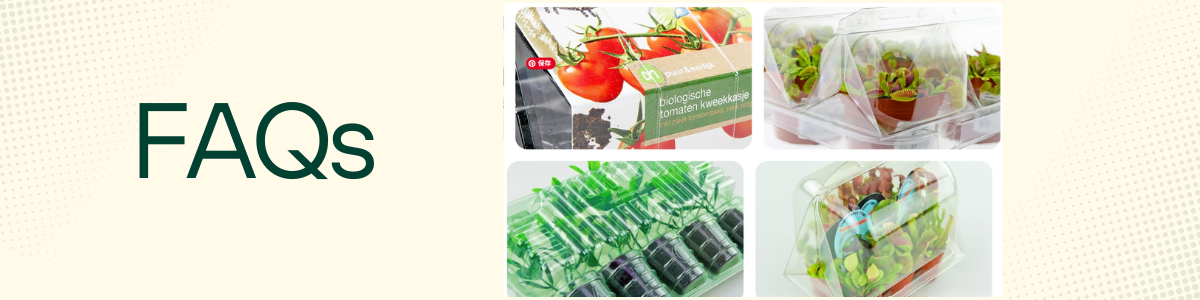






Live Plant & Mail Order Packaging
Problem
Solution
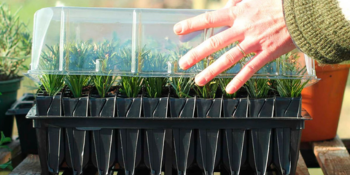
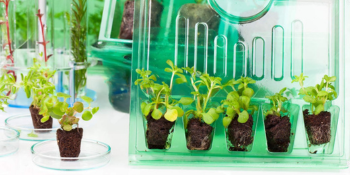
Professional Seedling Trays & Root Trainers
Problem
Solution
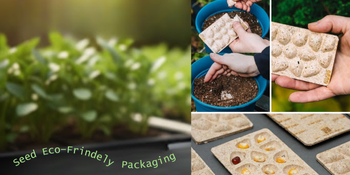
Eco-friendly Seed Blister Packaging
Problem
Solution
Innovate with Our Plastic-Free Blister Packs
Our Process
Initial Evaluation
1. Define the use case. Share the product type—garden tools, seed kits, plant accessories or nursery items—plus dimensions, weight, sales channel, annual volume and pack-out method.
Design Review
2. Review fit and risk. Send a product sample or CAD file so ELSE PACK can evaluate cavity retention, ventilation, moisture exposure, hang-hole position and transit protection.
Material Selection
3. Select the packaging system. We recommend the blister style, printed card or tray construction, PET, rPET or PP material and sealing method based on shelf display, mail order or e-commerce requirements.
Prototyping
4. Validate with a prototype. Use samples to check product fit, seed or plant protection, shelf presentation, sealing, carton configuration and shipping performance before tooling approval.
Production Tooling
5. Build and qualify tooling. After sample approval, ELSE PACK produces the forming and trimming tooling and confirms the approved dimensions, material and critical quality points.
Assembly & Card Printing
6. Prepare cards and pack-out. We coordinate blister tolerances with your printed cards, sealing equipment, assembly process and outer cartons to reduce launch delays.
Production
7. Run pilot and production. Start with an approved pilot quantity, then move to repeat production with checks for clarity, dimensions, seal area, fit and carton pack-out.
Ongoing Support
8. Support future SKUs. Our team keeps the approved specifications and helps adapt cavities, cards or trays when product dimensions, retailers or sustainability requirements change.
Case Gallery
Eco-Friendly Seed Packaging Solutions
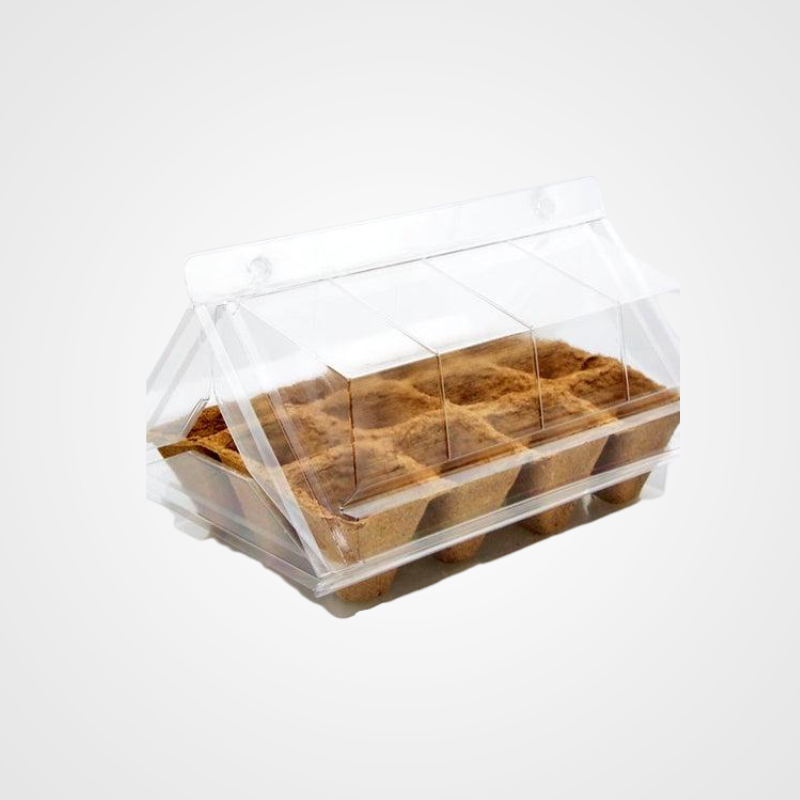
Paper Pulp Starter Trays
Biodegradable Seed Starter Kit
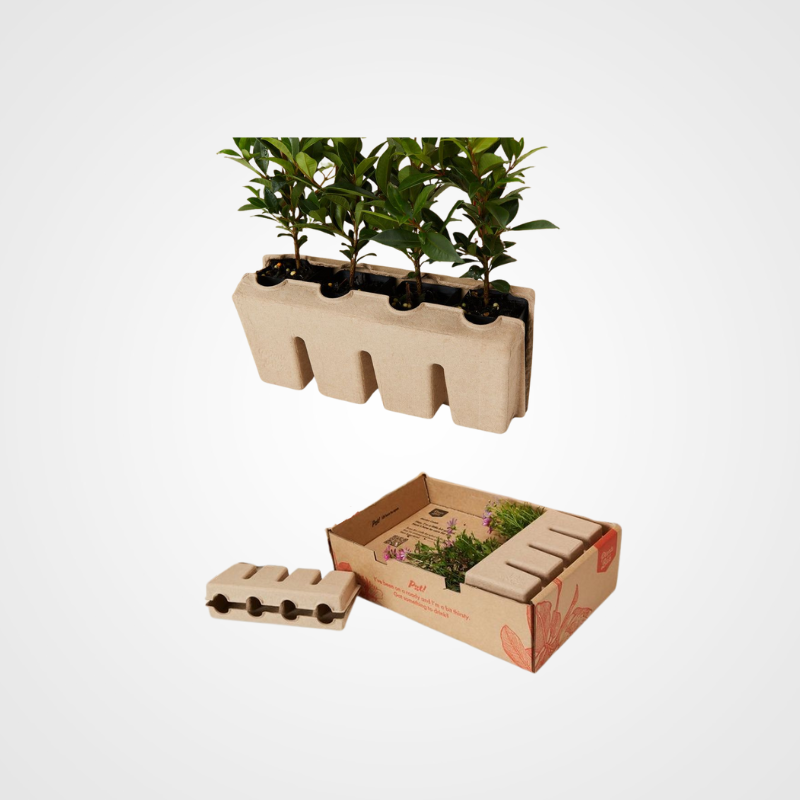
Molded Pulp Plant Packaging
Mini Gardening Kit Blister Pack
Bulb Blister Pack
Mail Order Blister Pack for Bonsai Tree
Seedling Carry Pack / Seedling Carrier Pack
Seed Blister Packs
Seed Face Cold Sealed Blsiter Packs
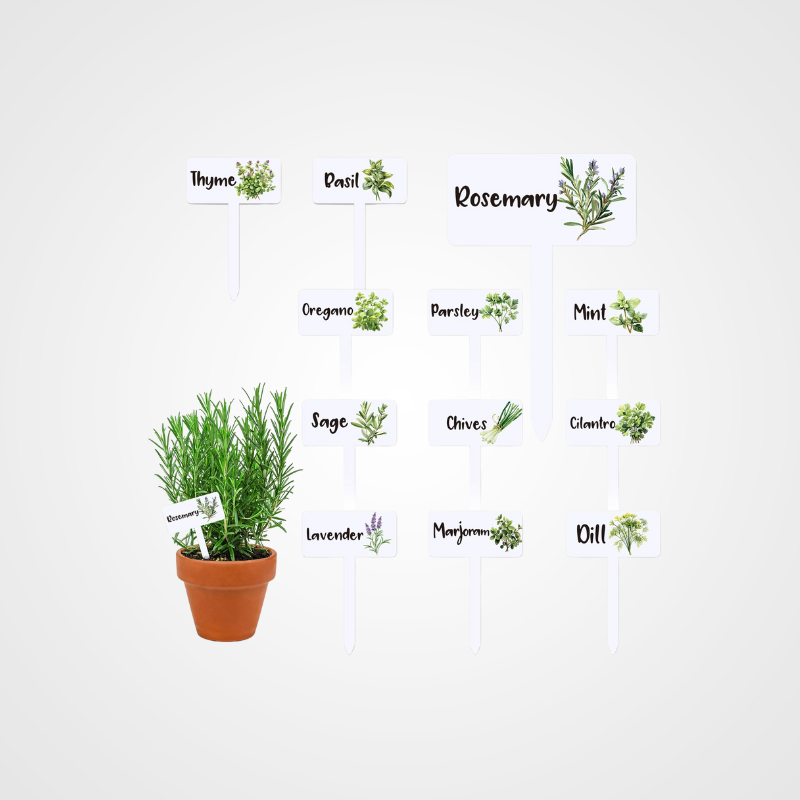
Plant Labels
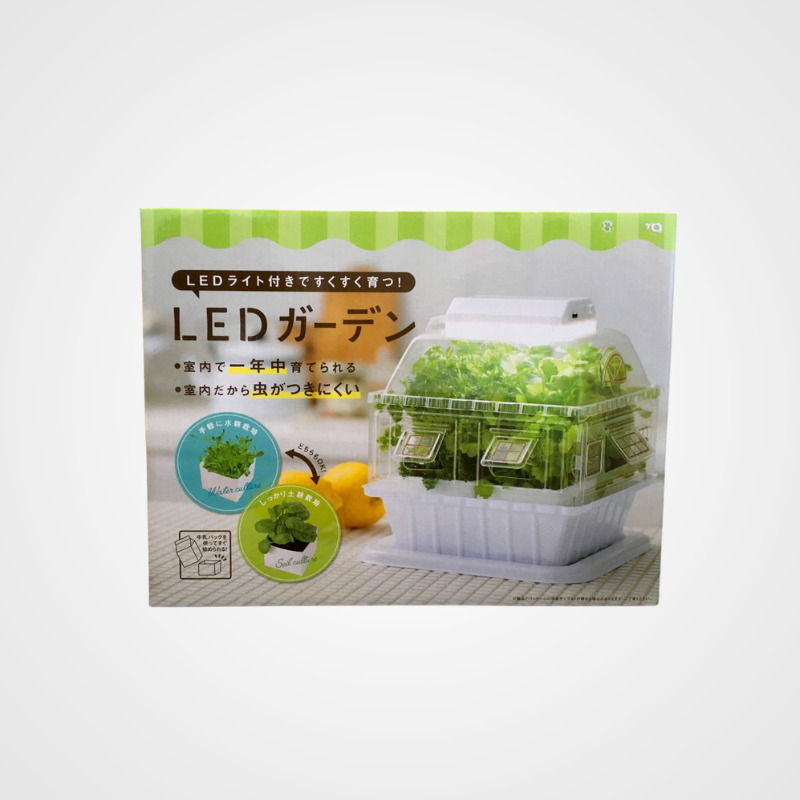
Mini LED Hydroponic Garden
Garden Tool Trapped Blister Pack
Slide Blister Pack for Pruning Shears
Seed Starter Kit with Propagation Dome
Silicone Seedling Starter Kit
Aquatic Plant Blister Packaging
Potted Cactus Blister Packs
Potted Aquatic Plant Cups / Containers
Fresh Herb Retail Display / Blister Packaging
Plastic Plant Drip Trays
Clear Hanging Plant Basket /Planter
Multi-Pot Carrier Tray
3-Piece Seedling Propagation Kit
Transit Tray for Potted Seedlings
Succulent Mail Order Packaging with Blister Insert
Seed Starting Kit with Root Trainers and Humidity Dome
Letterbox Mail-Friendly Plant Packaging
Seedling Cloches
Rectangular Plant Pot Liners
Plant Protectors / Plant Cones
Tunnel Cloches/Mini Row Greenhouses
Find Your Solution
What Garden Packaging Buyers Should Validate
"Will this packaging work smoothly with our machines? We can't afford downtime."
Can you customize the blister to fit our exact hardware dimensions, and how soon can you provide CAD or samples?
Yes. Send product dimensions, CAD files or physical samples and we can design the cavity around the tool, accessory or kit. CAD review and prototype timing depend on complexity and material availability; we will confirm the schedule in the quotation.
"Can we do small custom runs, and how fast can you deliver?"
Small custom runs may be possible depending on the blister size, material, tooling and printing method. Share your target quantity and launch date so we can recommend the most economical tooling and production route and confirm a realistic lead time.
"Will our plants arrive safely, or will they get damaged in transit?"
Packaging can be designed with ventilation, stem and root-zone clearance, secure retention and carton support to reduce movement and crushing. Because live plants vary by species and route, we recommend trial shipments and agreed transit tests before full production.
"Can you customize the cell sizes for our specific crops?"
Yes. Cell diameter, depth, spacing, drainage and ventilation can be tailored to the crop, plug size, root profile and handling process. Provide crop and tray requirements so we can design and sample the configuration before tooling approval.