

Cosmetic blister + Card
- Low-MOQ pilot (500–1000)
- 48h CAD/DFM
- 7–10d samples
- 2–3w pilot run
Pain Points & Solutions
Pain Points
- Slower time-to-marketwith prolonged design process
- Stricter retailer requirementsfor compliance documentation
- Poor sustainability practicesin existing packaging
Our Solution
- · Get a shelf-ready blister + cardin just 4 weeks
- Receive clear MoCRA/ REACH/Prop 65 documentation
- Utilize post-consumer recycledor paper-based materials
Plastic-free beauty packaging that still looks premium
Our Process
Initial Evaluation
The first step typically involves describing the retail environment in which your product will be sold, how the package will be assembled, the annual volume required and other factors that will determine whether a blister pack is an ideal solution.
Design Review
Once it is determine that a blister pack may work, we often start by requesting a sample or CAD drawing of the product. Our designers will use this and info from the Initial Evaluation to determine what type of blister packaging will work best.
Material Selection
In addition to developing the design and dimensions of the blister, our team will work to specify the best material for the application. While PET is the most blister material, our team can evaluate your assembly process and other needs to find the best fit.
Prototyping
With all of the specifications in place, our team can move to the prototyping stage where we create low-cost, tooling that can produce a limited number of physical blisters which one can use to test, configure shipping cartons, etc.
Production Tooling
After prototype approval, ELSE PACK produces the forming and trimming tooling and confirms the approved dimensions, material and critical quality points before pilot production.
Assembly & Card Printing
At the same time, we coordinate blister tolerances with printed cards, sealing equipment, assembly steps and outer cartons so production requirements are aligned.
Production
With all of the production tooling complete, blister cards sourced and assembly processes created, one can comfortably place an order for “production parts” and get busy packaging and selling the final packaged product to retailers.
Ongoing Support
After launch, ELSE PACK supports repeat orders, troubleshooting and design changes for new retailers, automation requirements or future SKUs.
Case Gallery
Beauty Trifold Blister Pack
Eye Mask Tinplate box blisteir insert
lipsticks Trapped Blister packaging
Sheet Masks Sealed Blister Pack
Beauty Full Face Sealed Blister Pack
Printed Clear Box for Shamp
Hydrating Serum Blister Tray
Soap Molded Pulp
Eye Mask Full Face Sealed Blister Pack
Beauty Products Paper Tube
Serums Ampoules Blister Pack
Eyeshadow Palettes Cardboard Box
Customer Reviews
Below are some frequently asked questions about the function of blister cards and blister packaging:
Can you make the packaging match my brand look exactly, even the small details?
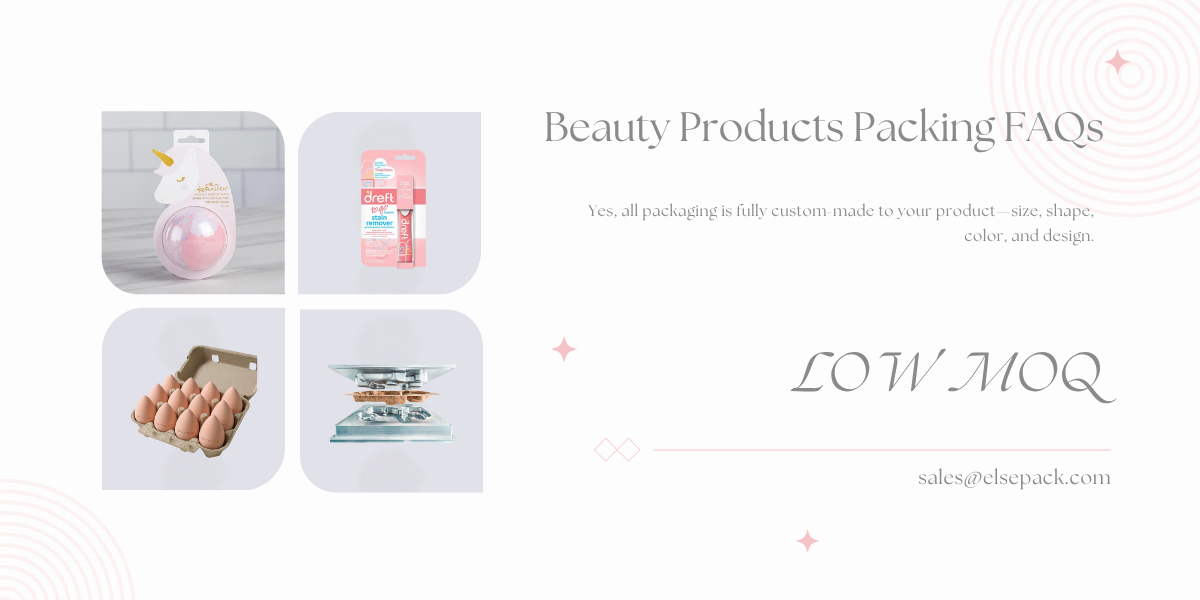
Yes. We can align the blister geometry, printed card, color references, finish, logo placement and retail display details with your brand standards. Final color and print approval should be confirmed against physical proofs and approved production samples.
Can you customize the blister to fit my product perfectly so nothing moves during shipping?
Yes. Tooling is designed from your product dimensions, CAD files or physical samples, with the required retention and clearance for delicate surfaces. Prototype samples are used to verify fit and movement before production.
Can we do a unique shape or color for the packaging so it stands out on the shelf?
Yes. Custom cavity shapes, contours, tinted plastics and printed-card graphics can be developed within tooling, material, visibility and sealing constraints. We will confirm manufacturability and color expectations during sampling.
Can you make the packaging stronger and more secure so it survives fulfillment and shipping without damage?
Yes. We can adjust material gauge, flange width, cavity support, seal area, insert retention and outer-carton configuration according to product weight and distribution risks. Transit testing requirements should be agreed before final approval.